The post-operative training
the market doesn't have.
And is starting to demand.
There is real demand for professionals who can guide post-operative recovery with a clinical method. Most courses out there are too superficial to build trust, or too technical to actually apply. The Academy lives in between: real science, in language you understand and can apply tomorrow.
There is plenty of training. What's missing is training that works.
What exists today:
On one side, quick courses that teach techniques with no physiological foundation: you learn the movement, but never understand the why. When something strays from the script in your treatment room, you don't know what to do.
On the other, academic programs dense with science (histology, inflammatory markers, tissue biomechanics) that never translate any of it into clinical practice. The student finishes knowing what happens in the tissue, but not what to do with the client in front of them.
The outcome in both cases is the same: a professional who works without confidence and who, without realizing it, can compromise the result of a surgery someone paid dearly to have.
What the Academy offers:
I move between both worlds. I speak the science (inflammatory markers, phases of healing, collagen histology, fascia biomechanics) and translate it into what you actually do in the second week after a lipo.
This isn't dumbing it down. It's a bridge: scientific rigor applied in language you absorb and use. That is my edge as an educator, and it is what allowed me to train physicians.
"I can move between both worlds: I speak the science, the markers, the histology, and I translate it so the student truly understands. That is my edge as an educator."
You are the professional the Academy trains, if you recognize yourself here.
You are a massage therapist, aesthetician, nurse, therapist, or another health professional, and you:
- ✓ Want to work in post-operative care, but know you don't yet have enough clinical grounding to do it safely
- ✓ Already handle post-op, but feel you are improvising, unsure exactly what you are doing in each phase
- ✓ See that the market is asking for this service and you don't want to be left out
- ✓ Want to charge more for what you do, and to justify it you need training that backs the value
- ✓ Are based in Europe and need training that respects the clinical standards here
It's not for those who:
- × Want to learn "contouring massage" or aesthetic techniques with no clinical foundation
- × Are looking for a certificate to hang on the wall, with no real commitment to learning
A training that already graduates professionals.
From the congress stage to the treatment table, the Neiva Cimini Academy already certifies professionals in the Método Neiva Cimini®. It is not theory: it is the technique taught, practised and certified.
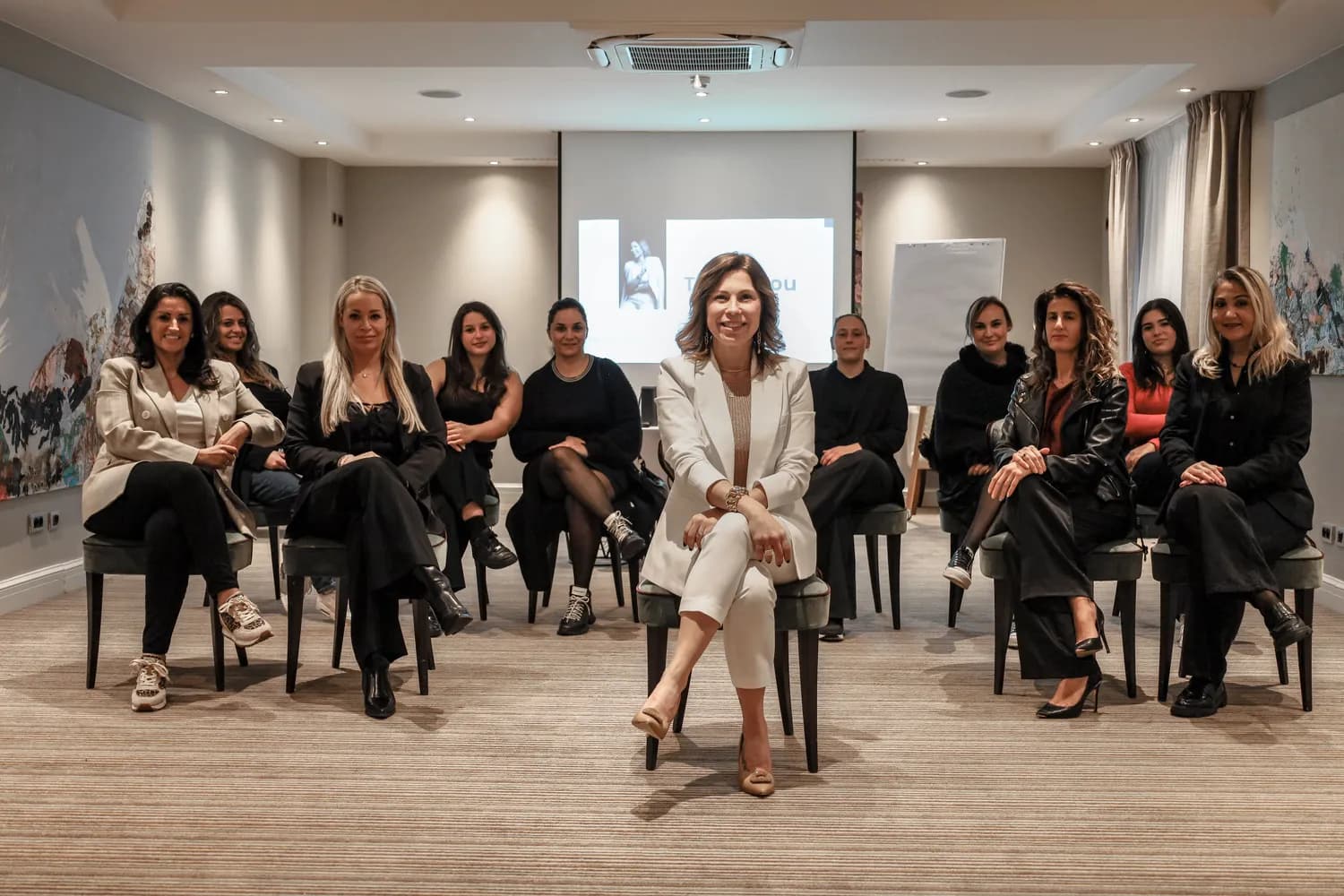
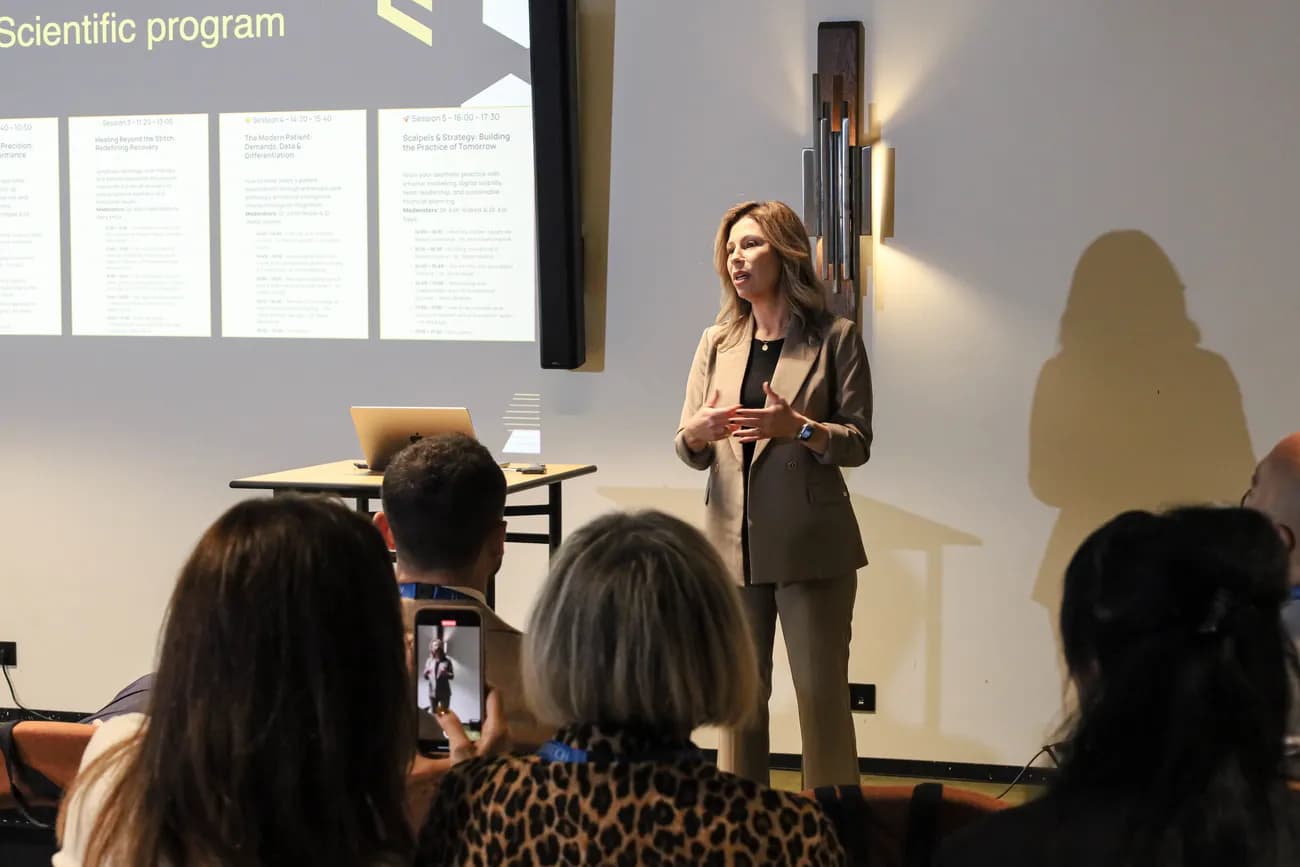
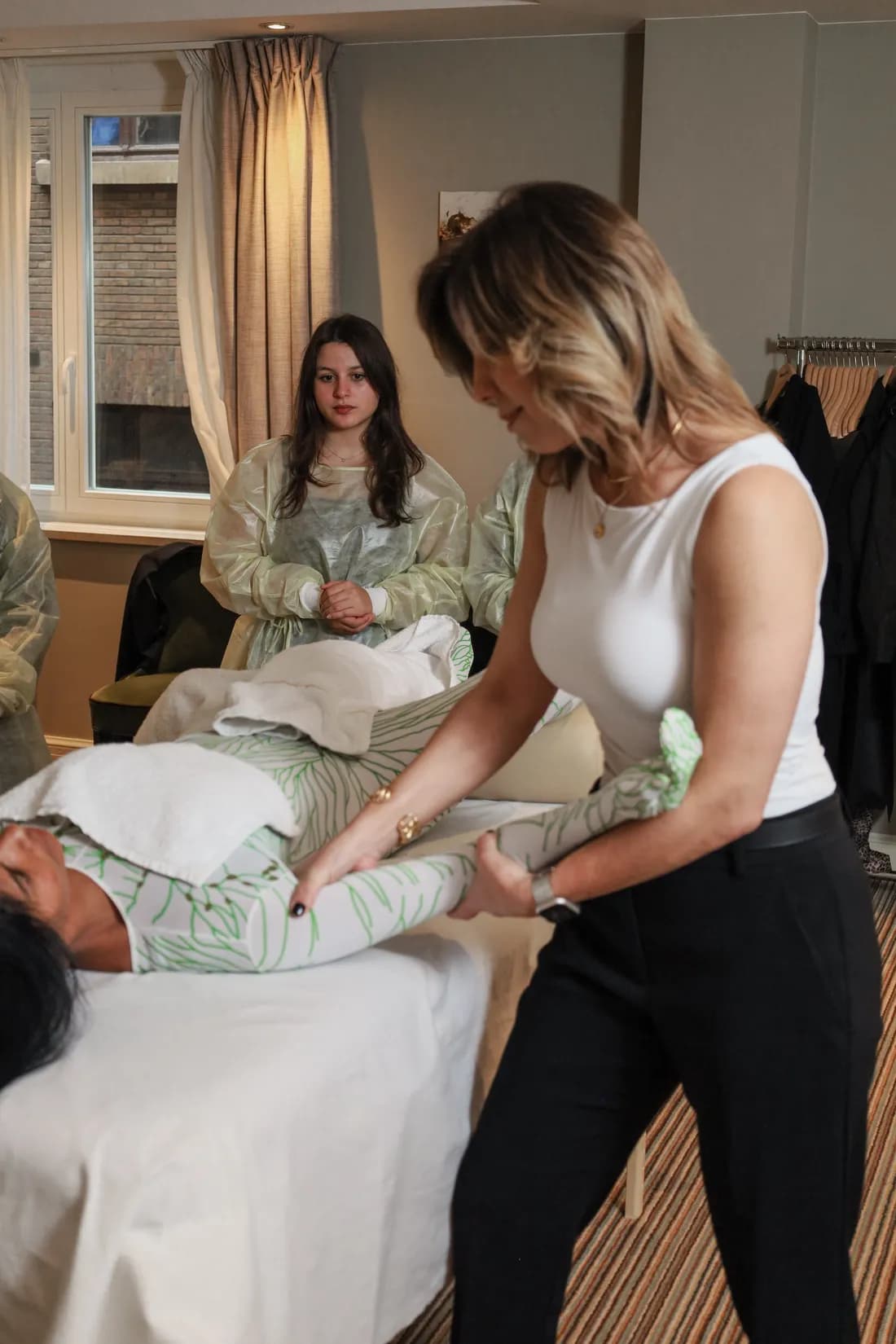
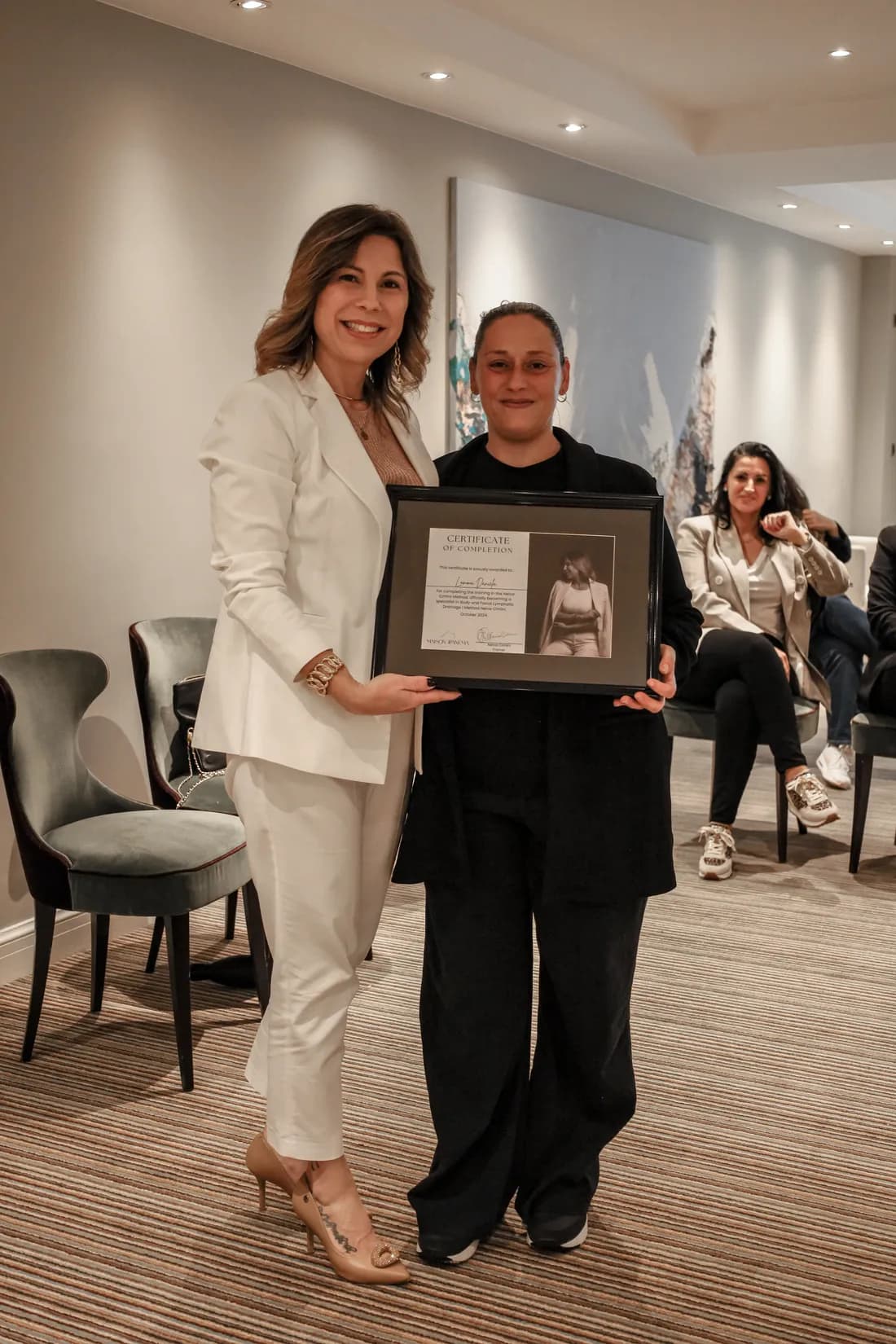

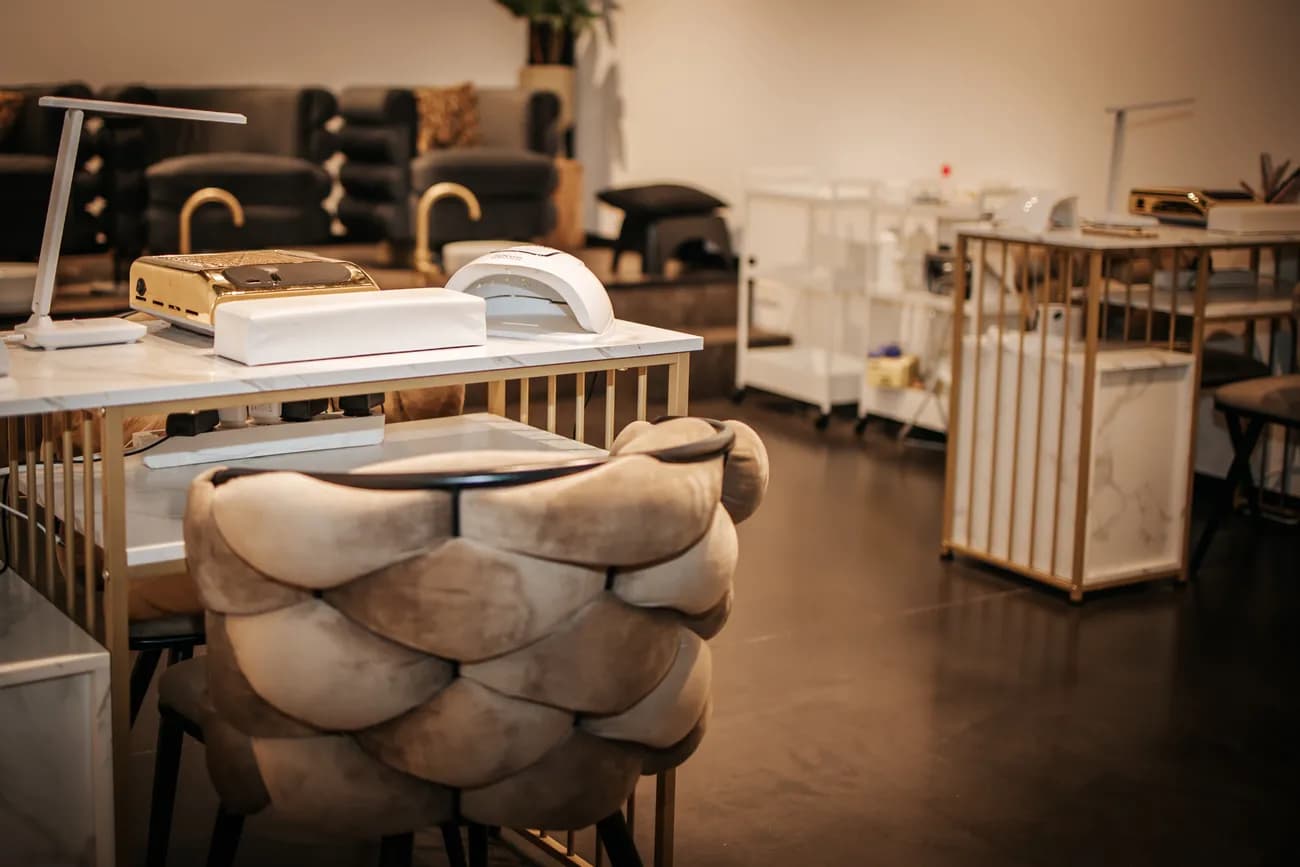
Progressive modules: start with the essentials, build the specialization.
The training is modular and progressive: you don't have to do it all at once. You start with the foundation most courses skip, and go all the way to full certification in the Method.
FOUNDATIONS OF POST-OPERATIVE CARE
The entry module · Level: Beginner to Intermediate
The clinical foundation that separates those who work in post-operative recovery with a method from those who work without knowing what they are doing.
What you learn:
- • Physiology of healing: the three phases and what happens in the tissue in each one
- • The lymphatic system: real anatomy, direction, what surgery changes
- • Inflammation control: why timing is everything, and what happens when you act at the wrong moment
- • Fibrosis: how it forms, why aggressive massage makes it worse, what actually works
- • Clinical lymphatic drainage: technique, pressure, direction (different from the aesthetic version)
- • Seroma: what it is, how to prevent it, what to do when it appears
Result at the end: you know what you are doing, why you are doing it, and when to stop. You work with confidence, and you can explain to your client exactly what is happening.
COMPLICATIONS: SEROMA AND FIBROSIS
Level: Intermediate · Prerequisite: Module 01 or equivalent grounding
What to do when recovery isn't going the way it should.
What you learn:
- • Spot the early signs of fibrosis and seroma (without diagnosing: what you observe and when to refer to the physician)
- • Manage cases of established fibrosis: what works, at which phase, with which technology
- • Organizing seroma: targeted drainage, compression, communication with the surgeon
- • When to stop and refer: the limits of your scope and how to communicate that to the client
- • Support technologies: TECAR, ultrasound, photobiomodulation, with indications and contraindications
Result at the end: you don't panic when recovery gets complicated. You know what to do. And what not to do.
PROTOCOLS BY TYPE OF SURGERY
Level: Intermediate to Advanced · Prerequisite: Modules 01 and 02
Every surgery leaves different tissue behind. The protocol has to reflect that.
What you learn:
- • Liposuction (conventional, HD, VASER): the tissue map, the phases, what changes in each variation
- • Abdominoplasty: fascial redistribution, seroma risk, phase-by-phase management
- • BBL: two surgical fields, early mobilization, specific precautions
- • Facelift / Deep plane: a protocol that differs from body work in almost everything (no TECAR, cervical chains, zero pressure)
- • Lipo in a patient with lipedema: baseline inflammation, increased dosimetry, functional goal
Result at the end: you have a protocol for every scenario, not one generic technique you try to stretch over everything.
MÉTODO NEIVA CIMINI®
Level: Advanced · Prerequisite: Modules 01, 02 and 03
Full certification in the Method, with the seal, entry into the directory of certified professionals, and access to the community.
What it includes:
- • A consolidation module and practical assessment
- • The official Método Neiva Cimini® seal, to use in your materials
- • Entry into the Directory of Certified Professionals
- • Access to the Professional Community, with ongoing support
- • Lifetime access to the material from the previous modules
Result at the end: you are not "just another course." You are a professional certified in a clinical post-operative method created by someone who practices inside a plastic surgery clinic in Meise and was invited to speak at ISAPS.
Before you decide, watch it. An introductory class on the phases of healing and the most common mistakes in post-operative care: the content that will change the way you look at what you already do.
Access the free masterclassIt's not just a course. It's what you get to offer. And to charge for.
Before the training:
You do drainage. Maybe post-operative care on someone's referral. But you're not confident about what you're doing in each phase, and that limits what you charge and what you offer. Clients with more complex cases intimidate you. Physicians don't refer to you because they don't know what you do.
After the training:
You have a method. You know what is happening in your client's tissue and why you are acting the way you are. You can explain it: to her and to her physician.
Surgeons come to see you as a trusted partner, not a spa alternative. You charge more, because you deliver more. And you can prove it.
The Directory of Certified Professionals puts your name alongside the Method, visible to anyone seeking post-operative care to a clinical standard.
Trained by someone who does the work, not someone who only teaches it.
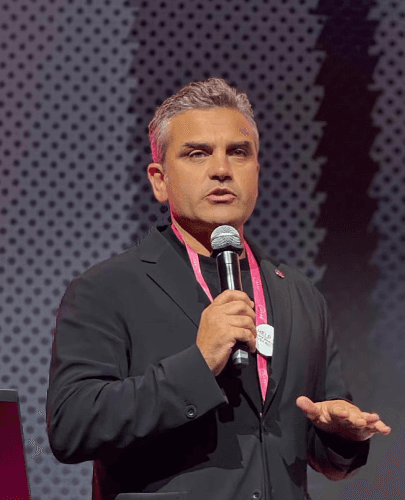
Neiva Cimini is not an instructor who left the classroom to run courses. She is still treating patients, still resolving complications, still inside a plastic surgery clinic in Meise. In 2026, she was one of the speakers at ISAPS Body Masters, alongside the world's leading body-contouring surgeons.
What she teaches is what she practices. The cases you will study are real. The protocol you will learn is the same one surgeons trust.
Discover her story →
The trust of those who have no need for pretty words.
What professionals most often ask before joining.
Do the modules carry a recognized certificate?
The certification is the Método Neiva Cimini®: a proprietary method, not a regulated academic degree. The value of the certificate comes from who signs it and what it represents: training by an internationally recognized specialist, with a verifiable methodology. For regulated academic certifications the paths are different (physiotherapy, medicine), and that is not what the Academy offers.
Do I need prior experience to start?
Module 01 is designed for those with a background in health or aesthetics but little or no specific experience in post-operative care. The only prerequisite is a professional foundation: you don't need to have done post-op before.
Are the modules live or recorded?
To be confirmed: decided before the first cohort opens. The likely format is recorded modules with live sessions for questions and clinical cases.
Do you take on professionals outside Europe?
Yes. The content is delivered in Portuguese and applies in any context: Brazil, Portugal, other Portuguese-speaking countries. The Directory of Certified Professionals is international.
When does the next cohort open?
Cohorts open in batches. The waitlist guarantees priority access and notification before the public opening.
The market is asking for this professional.
You could be that person.
No commitment. You receive priority access and notification before the public opening.