Post-operative recovery. For everything.
With method.
I take care of recovery once the surgeon leaves the operating room: body, face, lymphatic disorders and health. Conservative work, always in partnership with your doctor, respecting every stage of what your body is doing.
Book via WhatsAppYou had surgery. And now you're facing recovery alone.
Perhaps you had your surgery here in Belgium. Or in another country (Turkey, Colombia, Brazil, Spain) and came back with no one qualified to carry the recovery forward.
Perhaps the swelling isn't going down the way it should. Or a hardened area has appeared and no one can tell you whether it's fibrosis or not. Or you simply don't want to take chances: you want someone with a real method guiding the recovery of the result you invested in.
Perhaps you live with lipedema or lymphedema and you're tired of being treated as if it were cellulite, or as if nothing could be done beyond compression.
Or perhaps you haven't had surgery at all. You just know your body carries swelling, stress, fatigue. And you want an approach that treats this as physiology, not as spa aesthetics.
If any of these scenarios is yours, you're in the right place.
Each service has its own clinical logic.
BODY POST-OPERATIVE CARE
Liposuction · Abdominoplasty · BBL · Combined procedures
Recovering the body after plastic surgery is not linear, and it is not the same for everyone. A simple liposuction calls for one protocol; high-definition liposuction calls for another. An abdominoplasty combined with lipo has a completely different tissue map than a mini-abdo. BBL involves two surgical fields at once and specific risks of early mobilization.
For whom: anyone recovering from body surgery, whether days, weeks or months after the procedure. Including those who had surgery abroad and returned without support.
FACIAL POST-OPERATIVE CARE
Facelift · Deep plane · Blepharoplasty · Rhinoplasty · Combined procedures
The face is the area that forgives error the least, and the one that suffers most from inadequate approaches. The tissue is thinner, the vascularization is different, the cervical and auricular lymph nodes are often manipulated during surgery. The result: persistent edema is far more common on the face than on the body, and it can last for months if it isn't managed correctly.
For whom: anyone who has had a facelift, deep plane, blepharoplasty, rhinoplasty, or any combination. Especially relevant in cases of edema that persists beyond the expected, malar or mandibular fibrosis, and skin retraction.
LIPEDEMA AND LYMPHEDEMA
Ongoing conservative follow-up · Multidisciplinary support
Lipedema and lymphedema are not the same thing. And the mistake of treating one as if it were the other is one of the main causes of disease progression.
For whom: anyone with a medical diagnosis of lipedema or lymphedema, anyone who suspects the condition but doesn't yet have a diagnosis (referral to the right doctor is part of my role), and anyone who has had surgery for lipedema and needs specialized post-operative follow-up.
CLINICAL HEALTH DRAINAGE
Lymphatic modulation · Nervous system regulation · Longevity
Half of what I do is not post-operative care: it's health.
For whom: women before or after menopause, people with chronic stress, a persistent sense of swelling or fatigue, and anyone seeking a health approach that is neither spa nor conventional medicine.
You had surgery abroad. And came back with no one to continue.
Turkey, Colombia, Brazil, Spain, Poland. Many people have their surgery abroad, for the price, the quality, the availability. And they return to Belgium with no follow-up structure for their post-operative recovery.
The surgeon who operated is on the other side of the world. The local GP doesn't know the protocol. And recovery unfolds however it can, not the way it should.
This is exactly the profile I care for most often. It doesn't matter where you had surgery, how many weeks ago it was, or which surgeon signed off. What matters is where your tissue is now, and what needs to be done from here on.
The first assessment exists precisely for this: to understand your case, what happened and what comes next.
Book an assessment via WhatsAppThree steps, with no commitment on the first.
Initial assessment
We talk about your surgery (or condition), the stage you are at and what your doctor recommended. This is where I understand the map of your case: what was done, how much time has passed, what is bothering you, what you want to protect. No pressure, no forced package.
Tailored plan
From the assessment, I build the right follow-up for your case: number of sessions, intervals between them, technologies involved, stage-by-stage protocol. Every plan is individual, because each person's tissue responds differently, and each person's goal is different.
Guided recovery
I guide every stage with you. There is no standard session: each visit picks up where the last one left off. And when something changes, the protocol changes. The goal is to protect your result and give you confidence until you're discharged.
What people most often ask before booking.
Do I need my doctor's authorization to start?
I always work in partnership with the doctor who performed or is following your case. It's not bureaucracy: it's safety for you and for me. If you have no contact with the doctor who operated (in the case of surgery abroad), we discuss at the assessment how to resolve this.
Is this medical treatment?
No. My work is conservative follow-up, complementary to medical care. It is the doctor who diagnoses and prescribes. What I do is guide the recovery stage with a clinical method, which is different from self-massage, aesthetic drainage and physiotherapy.
How many sessions will I need?
There is no standard number. It depends on the surgery, the time elapsed, the state of the tissue and what you want to achieve. We define it together at the assessment. And the plan may change over the course of the follow-up as the tissue responds.
Do you treat people who had surgery in another country?
Yes, and it's one of the most frequent profiles in my practice. It doesn't matter where the surgery was performed. What matters is the current state of the tissue and what needs to be done.
In which language can I be treated?
Dutch, English, French and Portuguese. No language barrier.
Where do the appointments take place?
I practice in Maasmechelen and in Meise. The details of location and timing are shared at the moment of booking.
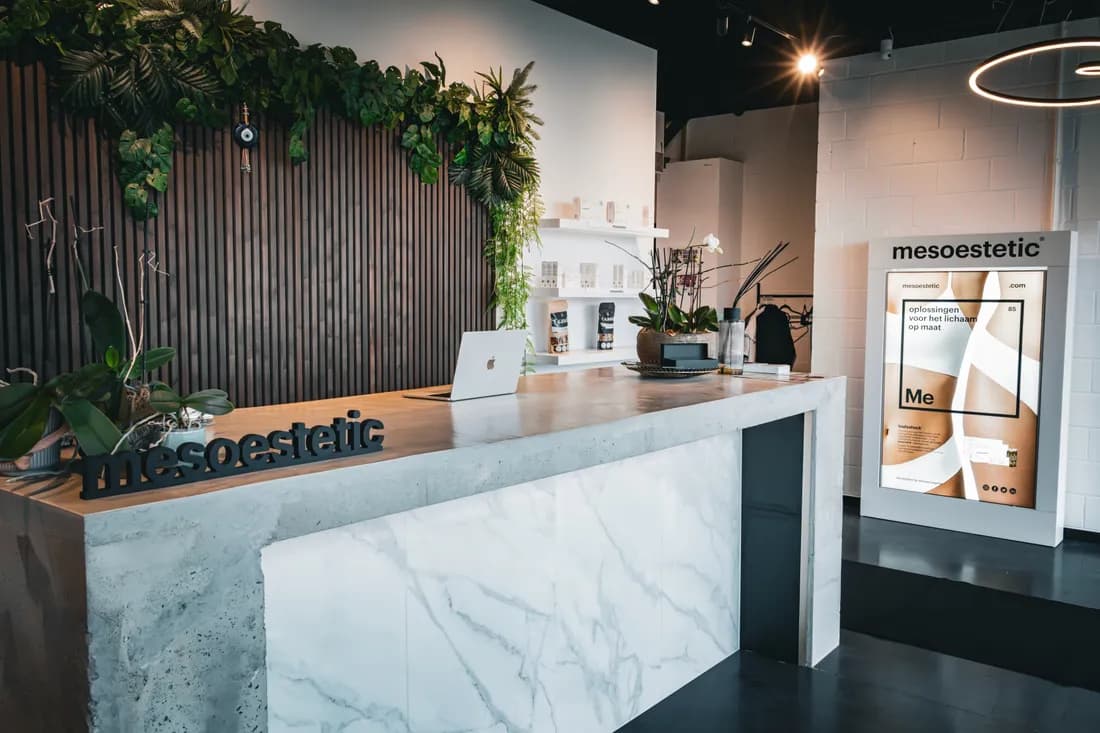
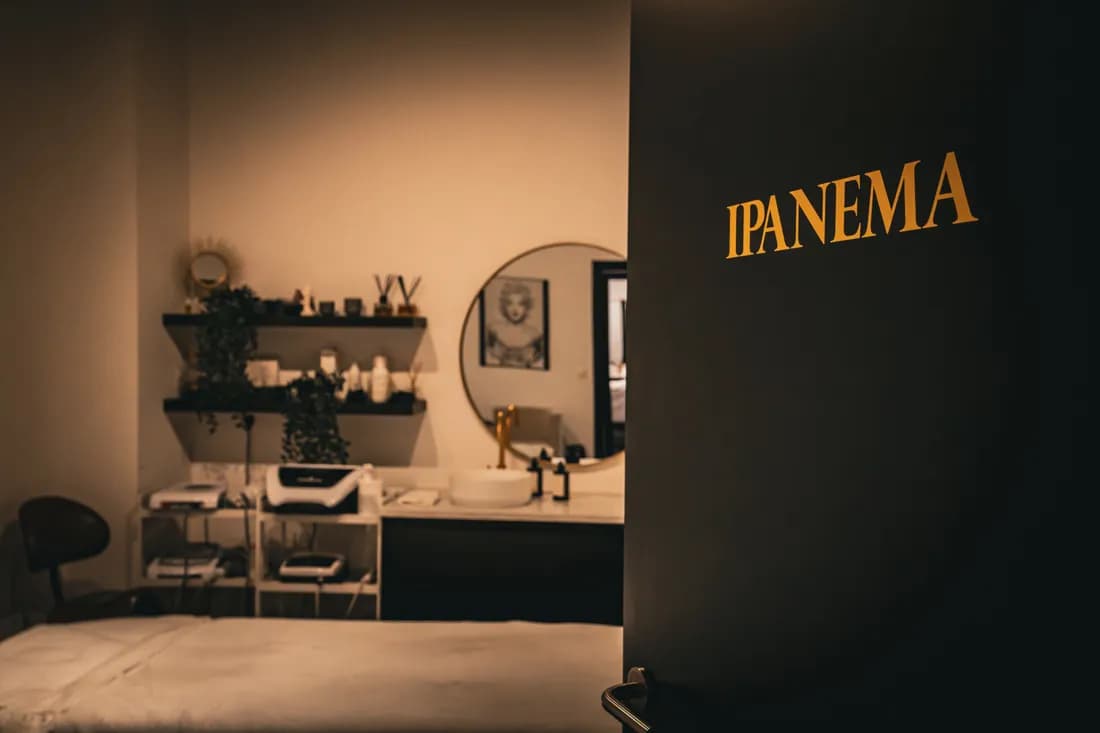
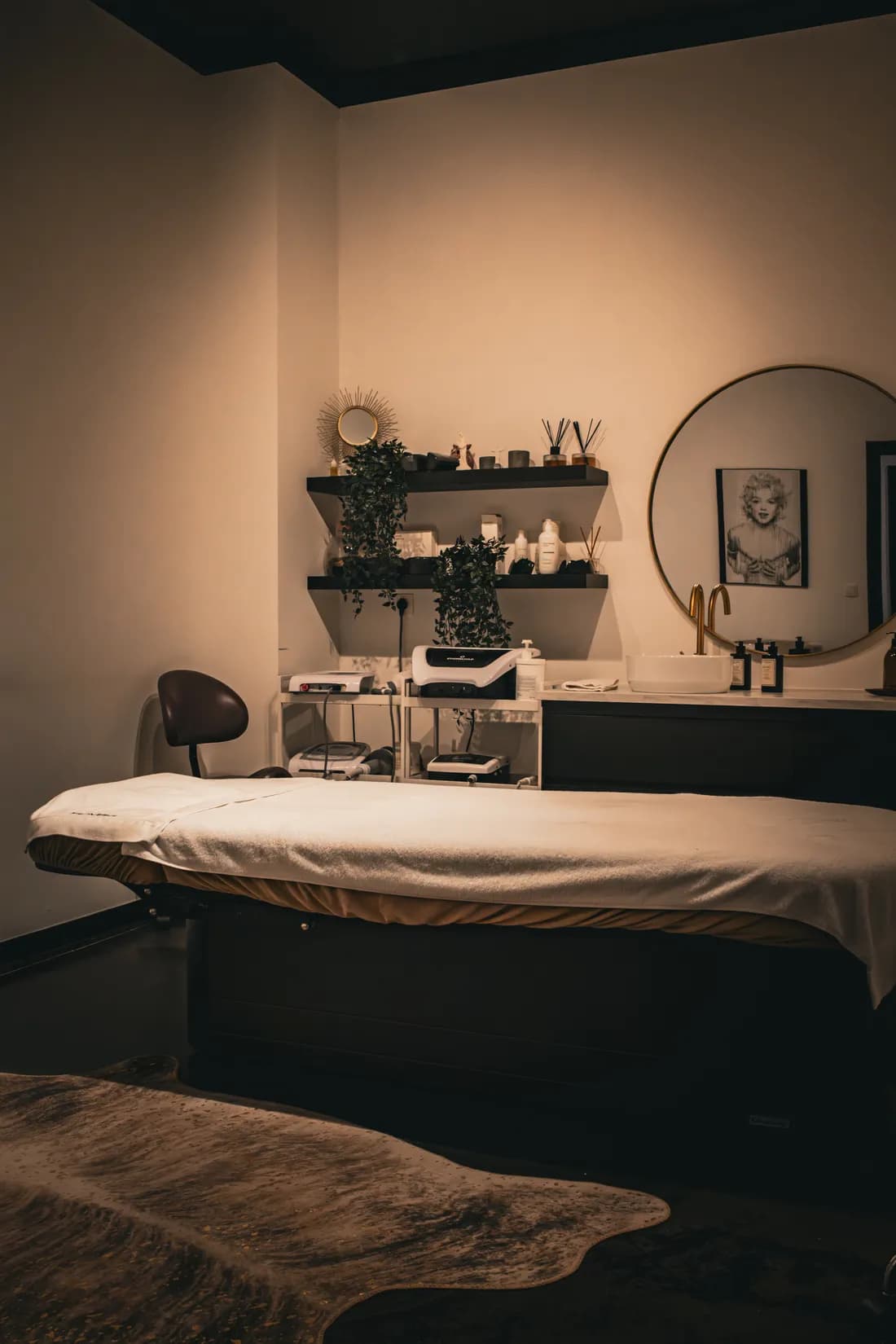
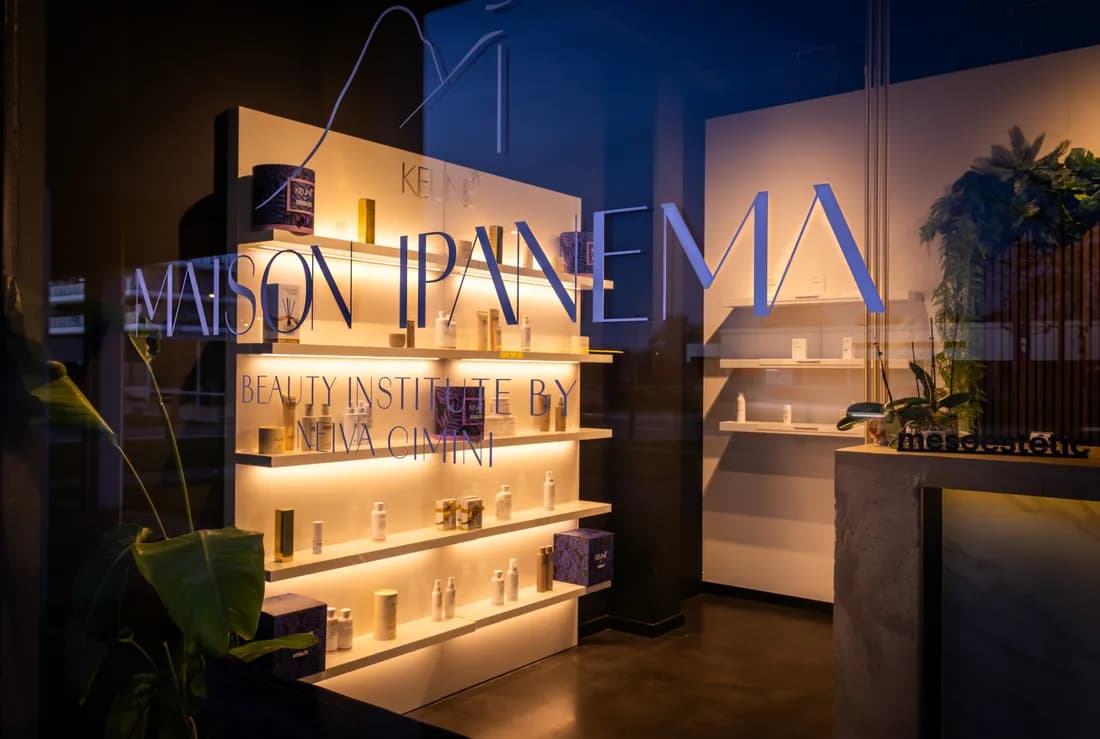
A space designed for your recovery.
Caring well also means welcoming well. Every detail of the Maison Ipanema Institute was designed so your recovery unfolds with comfort, privacy and calm.

Ready to care for your recovery.
With method. With rigor. Without rushing: my commitment is to the result, not to the clock.